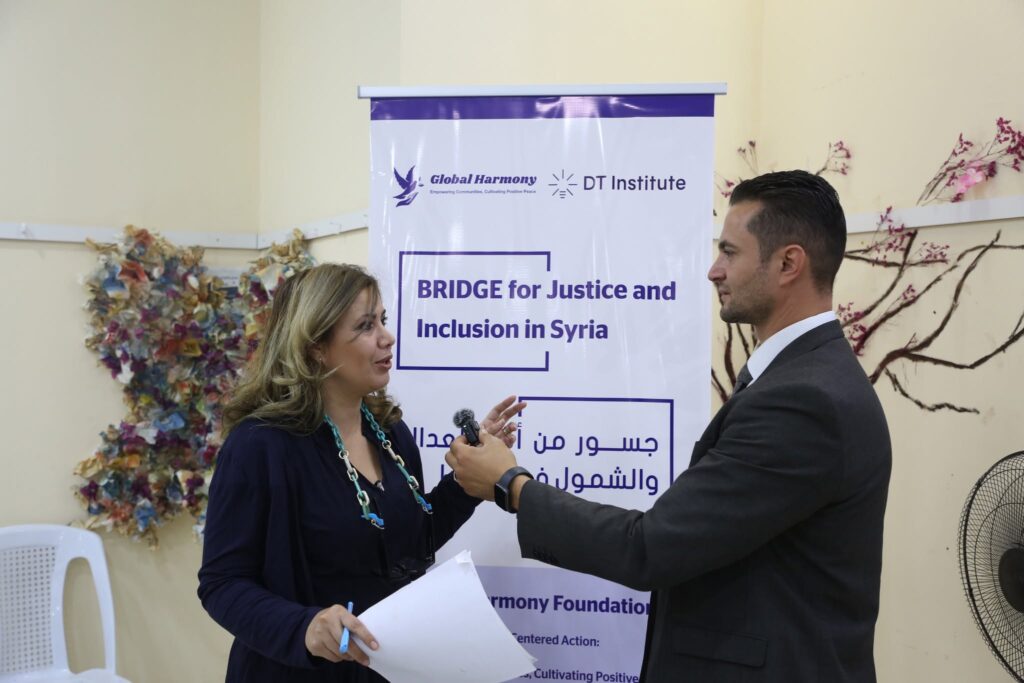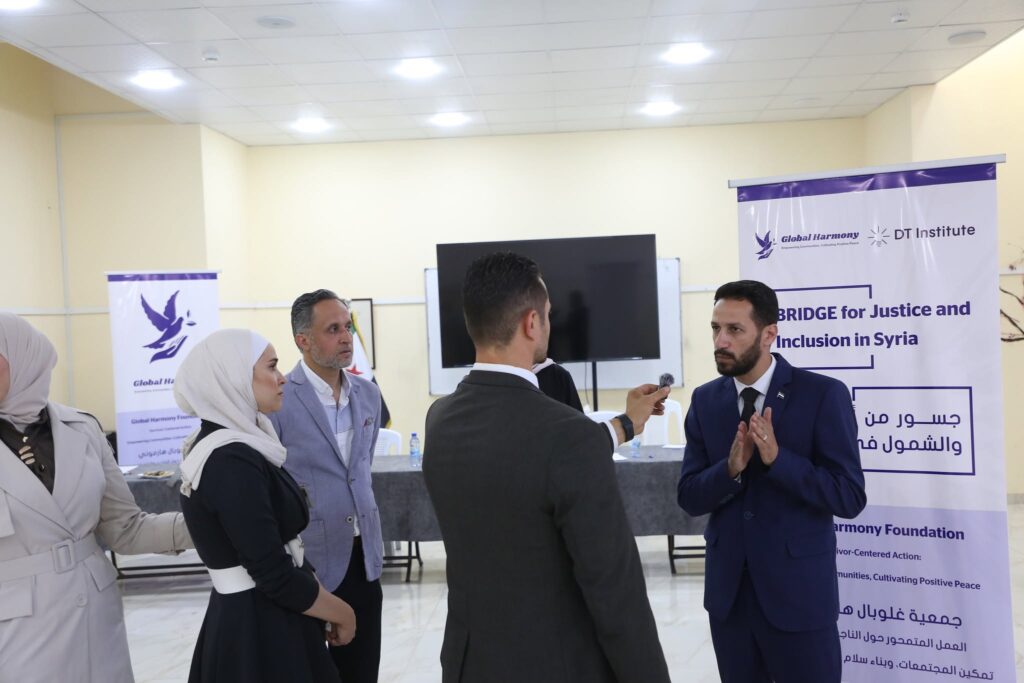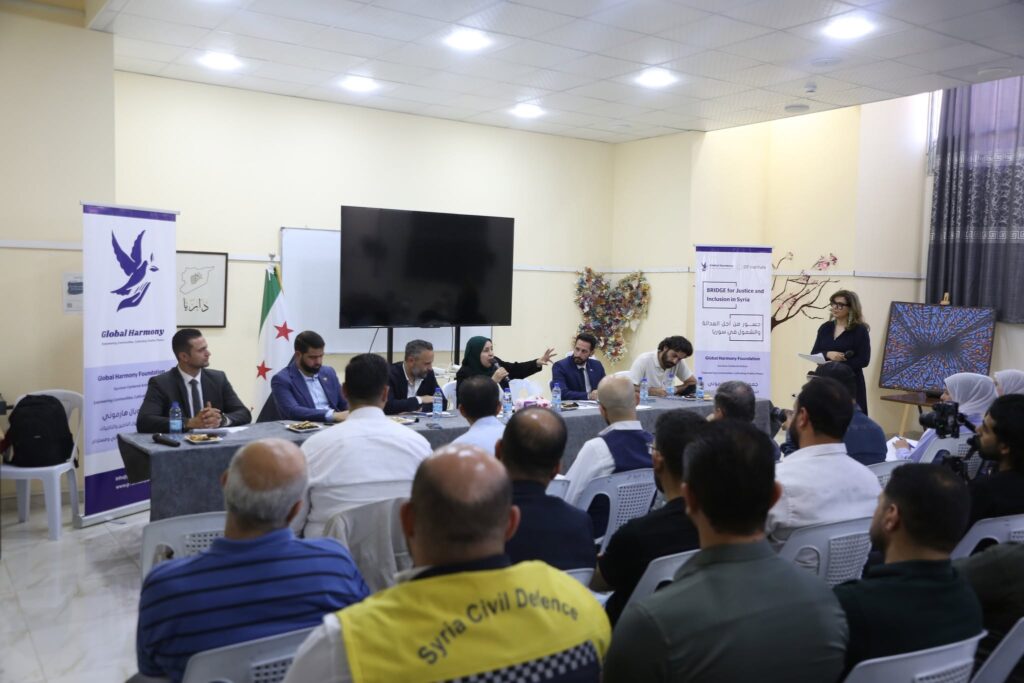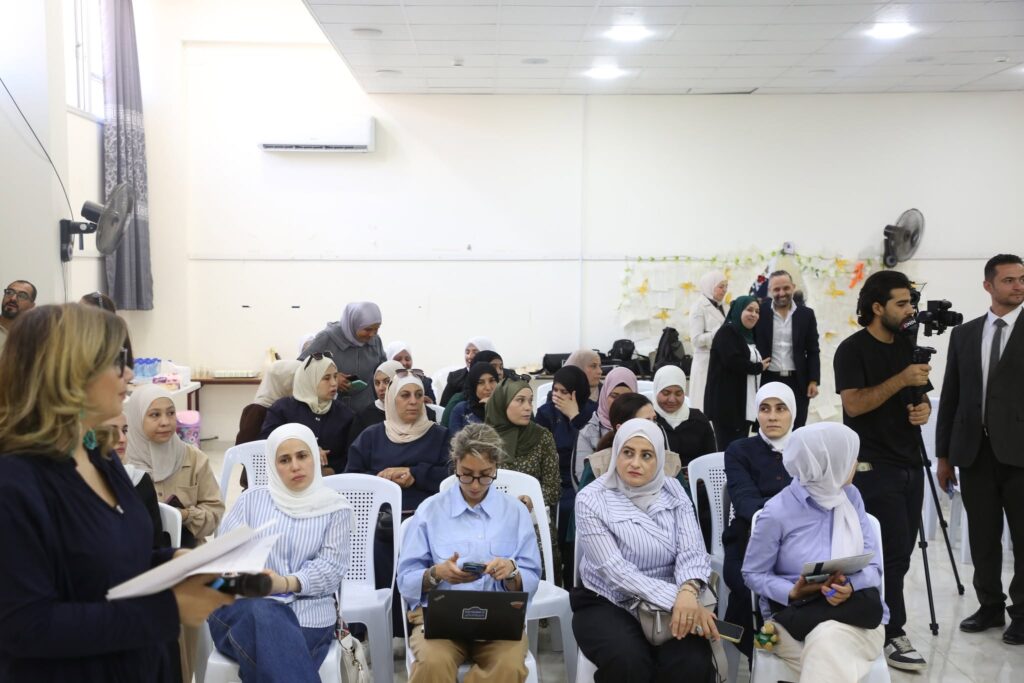
A recent dialogue session in #Darayya, Rural #Damascus, #Syria, brought together representatives from government institutions, civil society, legal professionals, and families of victims to discuss pathways for transitional justice and reparations in Syria.
Organized by Global Harmony Foundation in partnership with DT Institute, the session created a structured space for direct exchange between stakeholders on key pillars of transitional justice, including truth-seeking, accountability, reparations, and institutional reform.
Held at the Cultural Center in #Darayya, the discussion highlighted both the urgency and complexity of building inclusive, locally grounded approaches to justice, recovery, and social cohesion.
A key message emerging from local community representatives was the importance of better integrating transitional justice approaches within the Humanitarian–Development–Peace (HDP) nexus, ensuring that reparations, social recovery, and accountability mechanisms are not treated separately from humanitarian and development programming, but are embedded within a coherent long-term framework.
Government and institutional representatives present, including the #Ministry of Social Affairs and Labour, the #National Commission for Transitional Justice, members of parliament, and representatives of the national NGO forum, expressed interest in this perspective. They acknowledged the value of exploring how transitional justice components could be better aligned with broader recovery and social policy frameworks, and indicated openness to further consideration of this approach.
Key themes raised during the session included:
• The importance of structured dialogue between state institutions and affected communities
• The need for measurable progress in reparations and social support programs
• The role of civil society as a bridge between survivors and policymakers
• The demand from victims’ families for tangible, rights-based outcomes
Participants emphasized that transitional justice is not a single project, but a long-term national process requiring coordination, transparency, and sustained engagement with affected communities.
This session is part of a broader effort to expand dialogue formats across different regions, ensuring that voices of survivors and local communities directly inform ongoing policy discussions.
📌 Media coverage of the session can be read here: